

If I wanted to create a worldwide crisis, crash the global financial system, and herd the world into a tyrannical system of digital control, my actions would be a mirror image of what’s taking place today.
If I wanted to trigger the conditions to justify and necessitate the rollout of digital ID, digital currencies, and tokenized assets, here are the actions I would take and the events that would follow.
Cut-Off the World’s Oil
If I wanted to strike at the heart of the global economy, the first action I would take is to cut off as much of the world’s crude oil supply as possible.
Economic activity is directly correlated with energy use. And despite all the talk in recent years of “green energy” alternatives like wind and solar, the majority of the world’s energy comes from crude oil, natural gas, and their derivative products. Furthermore, a large percentage of the world’s industries and consumer products are dependent on crude oil byproducts like plastics.
As such, cutting off a large portion of the world’s crude oil supply would trigger a global economic contraction and crash global financial markets.
If my goal was to do so, here are the steps I would take:
Step #1: Close the Strait of Hormuz
The world’s number one chokepoint for global crude oil supplies is the Strait of Hormuz. A narrow waterway, serving as the only way in or out of the Persian Gulf, around 20% of the world’s crude oil and natural gas (accounting for approximately 40% of global exports) travels through the Strait every day. If I can cut off that one part of the global system, it would have a greater impact than anything else I could do.
So how would I go about that? One way is to launch a “regime change” war against Iran. As I stated in this February 28, 2026 video (Day 1 of the U.S.-Israel-Iran conflict), Iran’s only leverage in a conflict with the United States is to fire on shipping traffic in the Strait of Hormuz and/or fire on oil production and processing facilities in the Middle East to constrain world energy supplies and apply enough economic pressure on the United States to end the conflict.
These actions were easily foreseeable. And not surprisingly, they’re exactly what Iran did. As of this writing, we’re on Day 101 of the effective closure of the Strait of Hormuz with well in excess of 10 million barrels per day of oil that would normally traverse through the Strait cut off from the global market.
Step #2: Curtail Russian Oil Exports
If I wanted to cut off more crude oil supply and make sure the world didn’t get its crude oil from somewhere else, I would attack the export facilities of Russia – the #2 crude oil exporter on the planet.
It turns out that happened as well.
Since the U.S.-Israel-Iran war kicked off, Ukraine has ramped up attacks on Russian oil export facilities.
In March, Ukraine attacked the Ust Luga oil terminal 👇


In April, they attacked Rosneft’s Tuapse Oil Depot and Export Facility in Krasnodar Krai, Russia 👇

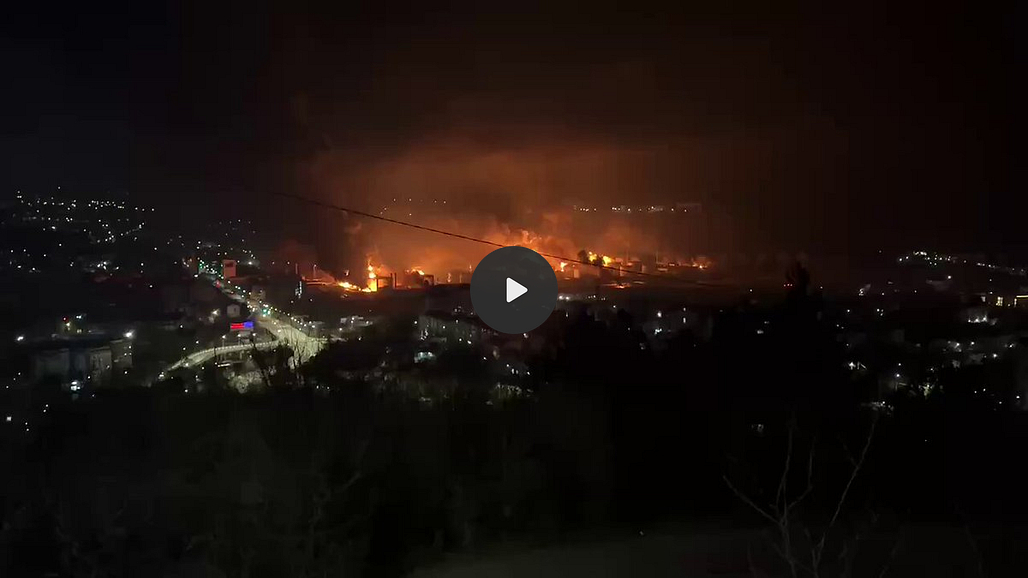
They’re also hitting pumping stations feeding into the Primorsk refineries 👇

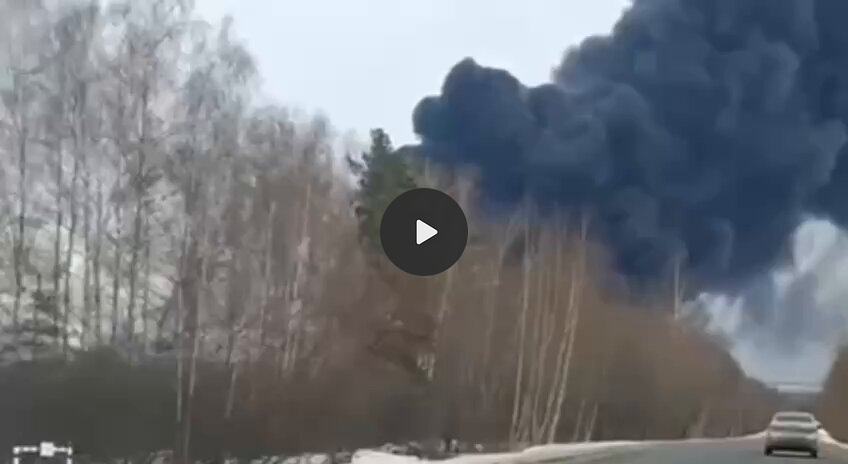
For more than three months, Ukraine has attacked Russian oil infrastructure 👇


The result? A loss of at least 40% of Russia’s oil export capacity (approximately 2,000,000 bpd) 👇

It will take a minimum of several months to repair all these facilities which, again, process more than 2,000,000 barrels of oil per day.
Step #3: Block Iranian Oil Exports
If I wanted to apply even more pressure to the global crude oil market, I would take the additional step of blockading Iran’s crude oil exports. Following the initial attack on Iran on February 28, the United States did not block Iran’s oil exports – even though it was clear within 48 hours that Iran was committed to blocking shipping traffic in the Strait of Hormuz.
Why did the United States not block Iran’s oil exports? Because Iran exports approximately 1.5 to 1.8 million barrels of oil per day. Blocking those exports would take more crude oil off the global market, making the energy shock even worse.
And that’s a bad idea.
But from my perspective, if I wanted to make the energy crisis worse, that’s exactly what I would do.
Turns out, that’s what the United States did too. The U.S. started blockading Iranian crude oil exports on April 13, exacerbating an already critical situation for global crude oil supplies.
Step #4: Artificially Suppress Crude Oil Prices
With millions of barrels per day of crude oil taken off the global market, I would now turn my attention to depleting world oil reserves – eliminating the buffer between a normal functioning oil market and a “tank bottom” crisis.
In a normal functioning market, given all that’s happened, the price of crude oil should rise significantly. The higher price would push buyers out of the market until a new equilibrium between supply and demand is achieved.
For example, if you double the price of crude oil in a day, fewer people will want to buy it. But if you keep the price the same, the same number of people will want to buy it. However, if the free market is thwarted so that price and demand stay the same while the supply significantly decreases, crude oil inventories and strategic reserves will get drawn down at a much faster rate than they otherwise would at a higher oil price.
If I wanted that to happen, I would get one or more central banks to print currency and short oil futures – artificially suppressing the price of crude oil. Is that what we’re seeing? Scott Bessent denies it.
But I do know this… Crude oil futures were over $130 per barrel on the night of Sunday, March 8th – just 7 days into the closure of the Strait of Hormuz. That night, they got bludgeoned and haven’t approached a similar level since.
This is despite the fact the situation today is markedly worse than it was on March 8th. We’re now on Day 101 of the closure of the Strait of Hormuz with more than 1 billion barrels of crude oil missing from the global market.
In a true free market, crude oil would now be at all-time highs. Make of that what you will.
Step #5: Draw Out “Negotiations”
Next, if I wanted to make the situation even worse, I would maintain the restricted oil flows for as long as possible to deplete global inventories. With 14 million barrels per day taken off the global market, the world would have no choice but to tap into commercial and government crude oil reserves.
Right now, this too is happening.
With each passing day, those crucial reserves dwindle away until any buffers capable of cushioning the shock are completely depleted. Once global oil reserves approach “tank bottom,” I would have the option take one additional step to trigger a global financial calamity at the exact time of my choosing.
Step #6: Escalate the War
To finish off the process and trigger a great reset, I would make a decision to escalate the war. I would reengage Iran in hostilities. I would carry out massive airstrikes and provoke a massive retaliatory response.
That response would predictably include strikes against oil production and processing facilities throughout the Middle East, attacks on Saudi Arabia’s east-west oil pipeline, and Houthi attacks on Red Sea shipping.
These attacks would take several million barrels per day of additional crude oil off the world market, send oil prices skyrocketing, and trigger a massive sell-off in global financial markets.
Is this what’s coming? We’ll see. I may or may not decide to do that.
But if I continue to keep the world on Step 5, it’s only a matter of time before we have the same outcome – skyrocketing oil prices and a global market sell-off. So Step 6 isn’t really necessary. It just speeds up the process if I want to.
Here’s What’s Happening Right Now
Fast forward to right now, and you can see I’ve already managed to do much of this. The world is being starved of the basic building blocks of global economic activity.
The effective closure of the Strait of Hormuz has led to the global seaborne trade loss of:
~12% of Crude Oil
~21% of Liquified Natural Gas
~16% of Gasoline
~10% of Diesel
~19% of Jet fuel
~15% of Bunker fuel
~20% of Propane
~20% of Butane
~47% of Sulfur
~35% of Sulfuric acid
~48% of Urea
~30% of Ammonia
~27% of Phosphate fertilizers
~20% of Ethylene
~20% of Propylene
~30% of Helium
~9% of Aluminum
Here’s How My Actions Trigger a “Great Reset”
Each of these items alone represents a crisis in normal times. But all at once? That’s a catastrophe.
It’s impossible to take this much supply of all of these items offline and not experience a global economic contraction.
The world is now experiencing the greatest energy shock in human history. At this point, a global depression can not be avoided.
The crude oil and liquified natural gas that never made it to the global market are simply not available at any price.
As I stated in “3 Reasons We’re in a Crisis Worse Than the COVID Lockdowns”:
“This is a fact I believe far too many people fail to understand.
This war isn’t simply resulting in higher energy prices. It’s resulting in less energy.
And energy is the lifeblood of all economic activity. Nothing moves without energy.
Some parts of the global economy will no longer receive the energy to which they’ve become accustomed.
And that means some parts of the global economy will no longer move.
This sudden stop in economic activity doesn’t end with a failure to produce oil and gas. Instead, it begins with the failure to produce oil and gas.”
This is because crude oil and natural gas are essential to the creation of just about everything in the global economy. Their absence on such a large scale will wreak havoc on global supply chains.
A loss of this magnitude has to result in economic contraction. It’s basic math. The only question at this point is how severe and enduring that contraction will be.

As S&P Global reports, fuel shortages could idle 10% of the global shipping fleet:
“The shipping sector is fast approaching a fuel crisis that could paralyze a tenth of the global fleet, Larry Johnson, global head of freight at commodities trading house Mercuria, said in an interview.
‘My view on marine fuel oil is there will be regional stock-outs by July and that there are potentially outages in the major hubs by August, September, at the latest,’ Johnson said.”
If 10% of the global shipping fleet can’t move, then it stands to reason we’ll see a corresponding 10% decline in global trade.
Post-World War II, a year-over-year contraction in global trade is extremely rare and often associated with significant economic downturns. For example, we saw contractions during the 1973-1974 oil shock (-11%), the 2008-2009 Great Financial Crisis (-22%), and the 2020 pandemic shutdowns (-7.4%).
Post-World War II, we’ve only seen two instances where global GDP contracted year-over-year – the 2008-2009 Great Financial Crisis (-2.9%) and the 2020 pandemic shutdowns (-4.9%). With more than 12% of the world’s crude oil and 21% of the world’s liquified natural gas taken off the world market, it becomes mathematically impossible to avoid a global economic contraction.
We’re not far from hitting “tank bottom” when it comes to global oil reserves. Once that happens, planes will be grounded. Trucks won’t move. Supply chains won’t supply. Factories will go idle, and employees will be sent home.
Whole economies will shut down, and global financial markets will crash 👇
Record Market Valuations
Meanwhile, the greatest energy shock in human history is taking place at the same time as the world deals with record overvaluations in U.S. stocks. Using almost any metric you can imagine, U.S. stocks are at the highest valuations on record – higher than 1929 and higher than the Dot Com Bubble.
The Buffett Indicator currently sits at 236.46% – the highest reading on record. At the height of the Dot Com Bubble, it was 148.6%. And that isn’t the only metric at all-time highs. The S&P 500 price-to-sales ratio is currently 3.58 – also the highest on record.
Global financial markets will struggle to justify such rich valuations, especially in a contracting global economy.
So in cutting off a significant supply of global crude oil supplies, I’m confident I can cause a market crash.
I also have something else I can bank on…
Japan is a Financial Powder Keg
Part of what fuels the record valuations on Wall Street is something called the “yen carry trade.” In simplistic terms, here’s the situation:
Following the collapse of a giant bubble in the Japanese stock and real estate markets in the late-1980s / early-1990s, Japanese politicians and central bankers fought hard to prevent the onset of a deflationary spiral.
Government spending on stimulus projects exploded, and so did Japanese government debt.
In order to prevent interest on Japanese Government Bonds (JGBs) from eating up 100% of tax revenues, the Bank of Japan (BOJ) engaged in an effort to artificially suppress interest rates.
The BOJ printed yen and used the proceeds to buy JGBs. This artificially lowered interest rates on those JGBs.
Global financial markets saw an opportunity to take advantage of these artificially low interest rates. Many traders decided to borrow Japanese yen at low interest rates and use the proceeds to buy foreign assets with higher yields. For instance, borrow at 1% and purchase U.S. treasuries yielding 4%. In simplistic terms, this is known as the “yen carry trade.”
This leveraged trade is quite profitable as long as interest rates remain low and the yen depreciates in value relative to the currency of the foreign assets purchased.
Over the years, it’s estimated the yen carry trade has built up to more than $20 trillion in global assets. Moreover, another $14 trillion in global derivatives are believed to be tied to the yen carry trade.
Here’s the question: What happens if Japanese interest rates rise and/or the yen appreciates relative to the foreign currencies underpinning the yen carry trade? What happens if that trade unwinds?
One way to find out is to cut off Japan’s oil supply.
Japan imports 97% of its crude oil, and 70% of those imports (pre-war) passed through the Strait of Hormuz. In the aftermath of the 1973 Arab Oil Embargo, Japan built up a strategic petroleum reserve. But that reserve is draining quickly 👇


As the energy shock worsens, not only will the price of oil rise on the global market, but the price of oil denominated in yen will rise faster. This is because Japanese oil imports are priced in U.S. dollars, and increased Japanese demand for U.S. dollars will further depreciate the yen versus the U.S. dollar.
In such a scenario, here’s what would happen:
This will further fuel the yen carry trade until the Bank of Japan becomes fearful of runaway inflation. If it does nothing in response, the resulting inflation will cripple its economy.
If it intervenes to arrest the depreciation of the yen relative to the dollar (i.e. raising interest rates), then we’ll see a sharp reversal of the yen carry trade.
As leveraged traders are forced to sell their foreign assets in order to meet margin calls denominated in Japanese yen, we’ll see a sharp increase in demand for Japanese yen.
A reversal of the leverage in the system will lead to a sharp appreciation of the yen relative to the U.S. dollar and other currencies, and this will lead to more margin calls.
As more margin calls are made, more traders will be forced to sell assets – assets all over the globe – in order to meet those margin calls.
This vicious cycle will feed on itself until the free market reaches equilibrium. In the meantime, we could see a significant portion of the world’s more than $20 trillion in global yen carry trade assets panic sold.
The panic selling of those assets will impact a significant portion of the world’s more than $14 trillion in global yen carry trade associated derivatives.
In the process, the stability of the entire global financial system comes into question.
And that’s how I end up triggering a great reset. Sounds like fun, huh?
If what you’ve read so far concerns you – share it.👇 Most people have no idea this is happening. The people you love deserve to know.
As financial markets plummet, regulators will uncover the existence of widespread fraud within the system – double-pledging of assets, “naked shorting,” even Ponzi-scheme activities.
In turn, many unsuspecting people will find their own pensions, retirement accounts, and regular brokerage accounts caught up in the turmoil of those events as the legal system attempts to determine who owns what.
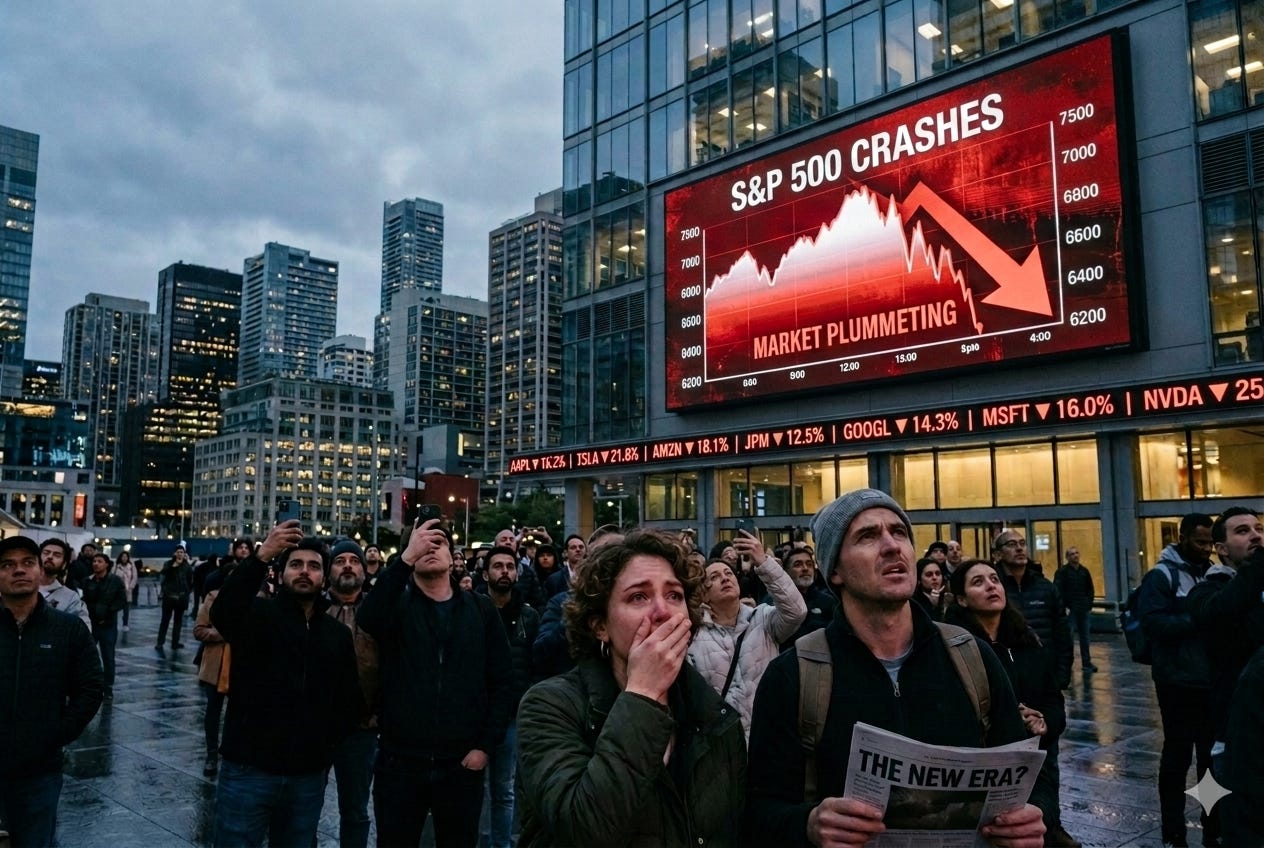
Then, Here’s What I Would Do Next…
Once I triggered a worldwide economic downturn and crashed the global financial markets, the table would be set to push everyone into my digital control system.
The first order of business? Digital rationing.
Step #1: Digital Rationing
With most nations running short on essential items such as fuel and food, I’d tell everyone rationing is necessary to avoid shortages. Of course, that’s a lie – free market pricing is the best way to avoid shortages. But most people don’t know that.
I’ll tell them rationing is nothing to be afraid of. It’s certainly not a government power play or control measure. In fact, lots of governments rationed supplies during World War II. We’re just doing what people did back then.
However, unlike the World War II generation, we can’t hand out cardboard ration cards. Too easy to counterfeit. Too many people would game the system.
To make sure everyone gets their “fair share,” we’ll need to institute a rationing system not so easily gamed – one based on biometric digital ID.
Your biometric data (facial features, retinal images, fingerprints, or even DNA) will make sure you and no one other than you gets your fuel or food ration.
Since people need fuel and food to survive, it will be easy to herd a large portion of the world population into a system that runs on biometric digital ID. Then, I’d move on to the next step.
Step #2: Tokenized Assets
The absolute chaos unleashed in financial markets, particularly from a collapse in the derivatives complex – something Warren Buffett called “weapons of financial mass destruction” – will throw millions of people into panic mode as they fear loss of their pensions or retirement funds.
No problem, I’ll say. Yes, the fraud in the system compromised your holdings. But we can restore everything you had before the crisis and make sure nothing like this ever happens again. All we have to do is “tokenize” all the world’s securities and put them on the blockchain where they’ll be “safe” from something like this ever happening again.
When we link these tokenized assets to your digital ID, you’ll have clear, transparent ownership. Of course, the government will have insight into every transaction you make. And those tokenized assets will also feature “smart contracts,” meaning they’re programmable by nature. Of course, they won’t be programmable to your benefit, but rather to mine. But you’ll like it and be happy, because that’s one of my preconditions for restoring your lost retirement funds.
Step #3: Digital Currency (CBDCs and Stablecoins)
As with stocks and securities in retirement accounts, I’ll do the same thing with bank savings accounts, money market accounts, and certificates of deposit. Were your cash holdings lost or put at risk during the great crisis? No problem. I’ll replace your holdings – with digital currency.
You can be “made whole” in terms of restoring your financial holdings, but only with government issued stablecoins and/or central bank digital currency (CBDC). Of course, like the “smart contracts” deployed in tokenized assets, these digital currencies will also be programmable. As the Genius Act states:
“All stablecoin issuers must possess the technical capability to seize, freeze, or burn payment stablecoins when legally required and must comply with lawful orders to do so.”
I’ll make this true for all legal forms of digital currency. After all, so many nefarious people do awful things with currency, and I want to protect you. Digital currency will be necessary to protect the public from fraud.
Remember Bernie Madoff? People gave him their life savings, and he used those savings to enrich himself while running a Ponzi scheme. With digital currencies, I can make sure that never happens again. I’ll be able to “see” every buy and sell transaction in real-time. If a guy like Bernie uses investor funds to buy a yacht instead of securities, I’ll know that in real-time. And with that knowledge, I’ll be able to stop him before he causes more damage.
After all, we live in the 21st Century, so why are we still relying on 20th Century financial regulation? We need 21st Century surveillance and regulatory power to deal with a 21st Century financial system.
Step #4: Ban Cash
Once I’ve convinced enough people to willingly walk into my digital control system, I can force all the holdouts in as well (you know who I’m talking about – all those Christians, preppers, and other “extremists”). All I have to do is make cash transactions illegal. After all, who uses cash? Only drug dealers, terrorists, money launderers, and other criminals use cash.
Great Reset Completed…
At this point, I’ve effectively triggered a “great reset” of the global financial system. I’ve managed to herd the entire world into my tyrannical system of digital control, and the best part?
The world thanks me for it.
They laude my actions as heroic. After all, I helped save them from “the crisis.”
Of course, the world doesn’t have to know I engineered the crisis to begin with. Although, even if someone told them, no one would believe it anyway. After all, who could ever conceive of such a diabolical plan?
That’s How I’d Do It
And that’s how I would trigger the great reset. Of course, that’s not what’s happening. I’m just a “conspiracy theorist,” right?
I’ll leave that for you to decide.
Maybe all of what’s happening is just a grand coincidence.
Maybe we’ll only see one piece of this system – digital ID for digital rationing – come out of this current energy shock.
But here’s what I do know.
Almost 2,000 years ago, the Book of Revelation foretold the future arrival of a global economic system where one man has the power to control who can buy and who can sell (Revelation 13:16-17).
We now live in a world where the infrastructure for a system with this exact same capability is under construction.
Do you really think the governments of the world will build such a system and not use it?
Of course not.
To use it is the whole reason they’re building it.
It’s just one more sign of the times in which we live. And you can be certain of one thing…
Jesus is coming back.
If this article helped you understand the times we’re living in, pass it on. Someone in your life needs to read this before it’s too late.👇
If you like this article, click the “Share” button above to share it with your loved ones and spread the Good News of Jesus! Also, please click the ❤️ button or re-stack buttons below so more people can discover this information on Substack 🙏
Hi Britt and Jenny and family, God's blessings for you all. Yes Britt, I see this is clearly coming. I'm always praying we will not be here, but God only knows. I think God set up Trump to bring this all in, the time is drawing near. We must pray and stay close to the Lord Jesus Christ, and tell others of his saving grace. He's the only way to Heaven. Thank you Britt for all you and Jenny do. ❤️🙏
Yikes. Thank you, Britt. This makes all too much sense. God bless & Maranatha!!! 🐑 ✝️ 🇮🇱
Stay safe out there, everybody...